
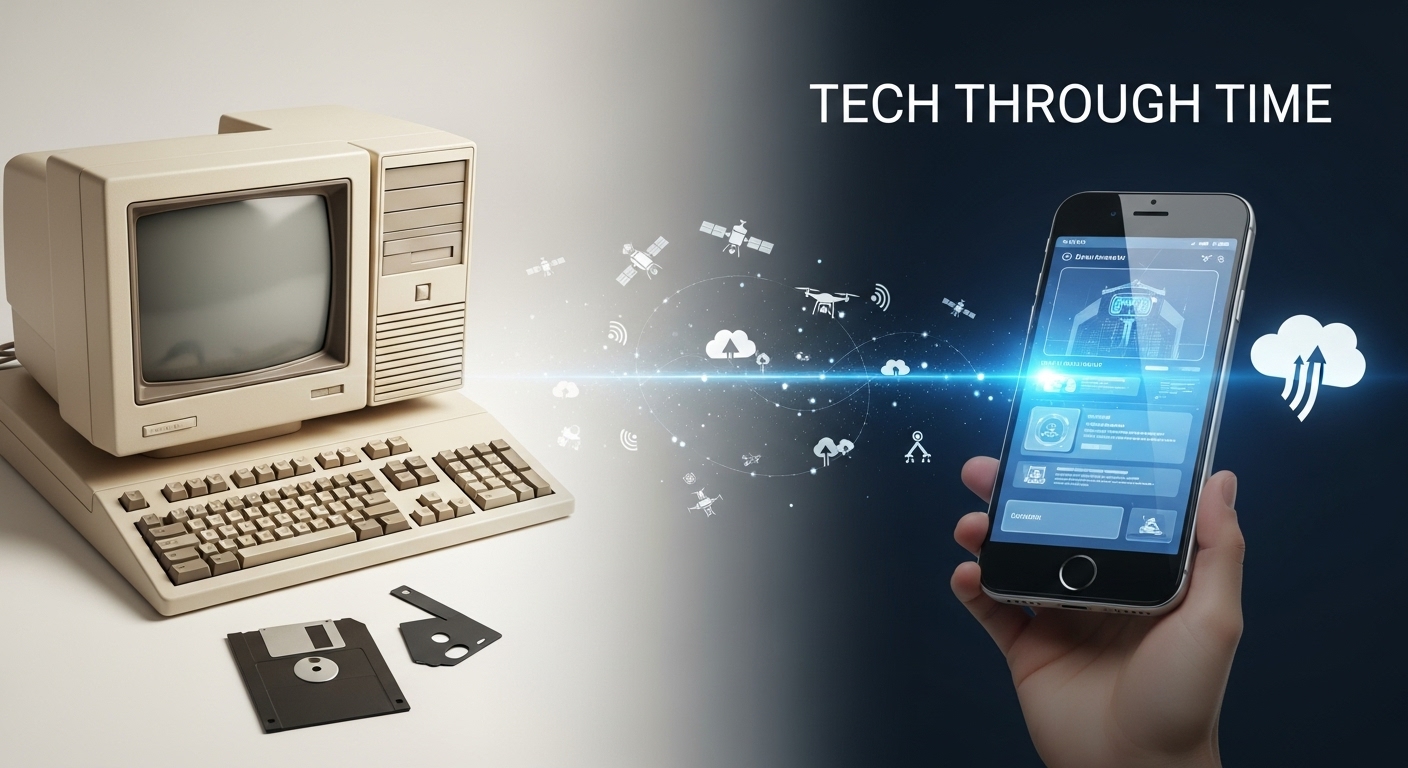
Technology has become the cornerstone of modern society. From communication to healthcare, transportation to entertainment, technology permeates nearly every aspect of our lives. Over the last few decades, rapid advancements have reshaped industries, altered human behavior, and introduced opportunities that were once unimaginable. In this blog post, we will explore the multifaceted world of technology, its historical evolution, current trends, and the innovations shaping the future.
The Evolution of Technology
Technology, at its core, is the application of scientific knowledge for practical purposes. Its roots trace back to the earliest human civilizations when basic tools, fire, and the wheel transformed daily life. The Industrial Revolution marked a turning point, ushering in machinery, steam engines, and mechanized production. This era laid the foundation for the modern technological world.
The 20th century introduced unprecedented breakthroughs. The invention of the telephone, radio, and television revolutionized communication. Computers and the internet brought global connectivity, democratizing information and transforming economies. Today, technology is no longer confined to laboratories or industries; it is embedded in our homes, workplaces, and even our pockets.
Artificial Intelligence: The Rise of Intelligent Machines
One of the most transformative developments in modern technology is artificial intelligence (AI). AI involves creating systems capable of performing tasks that normally require human intelligence, such as problem-solving, pattern recognition, and decision-making.
Machine learning, a subset of AI, allows computers to learn from data and improve over time without explicit programming. This technology powers applications ranging from virtual assistants to recommendation engines and self-driving cars. Natural language processing enables machines to understand and generate human language, leading to breakthroughs in communication and automation.
The impact of AI extends beyond convenience. In healthcare, AI algorithms analyze medical data to assist in diagnostics and treatment planning. In finance, AI helps detect fraud and optimize investment strategies. The continuous evolution of AI promises to redefine industries and create new opportunities for human collaboration with intelligent machines.
The Internet of Things: A Connected World
The Internet of Things (IoT) refers to the network of interconnected devices capable of exchanging data. Smart homes, wearable devices, and industrial sensors exemplify IoT’s potential to make environments more intelligent and responsive.
Smart home devices, such as thermostats, security cameras, and lighting systems, enhance convenience and energy efficiency. Wearable health monitors track vital signs, fitness levels, and sleep patterns, empowering individuals to take proactive control of their health. In manufacturing, IoT sensors enable predictive maintenance, reducing downtime and optimizing operations.
IoT’s integration into daily life brings both opportunities and challenges. Data privacy and security remain critical concerns, as interconnected devices generate vast amounts of sensitive information. Despite these challenges, IoT is poised to redefine the way we live, work, and interact with the environment.
Cloud Computing: The Backbone of Modern Digital Infrastructure
Cloud computing has transformed how businesses and individuals access and manage data. By leveraging remote servers hosted on the internet, cloud computing eliminates the need for traditional on-premise infrastructure. This shift has enabled scalable, cost-effective, and flexible solutions for storage, computing, and application deployment.
Enterprises rely on cloud platforms for hosting websites, managing databases, and running complex applications. Cloud-based collaboration tools have revolutionized remote work, allowing teams to collaborate seamlessly across geographies. Additionally, cloud computing supports emerging technologies like AI and big data analytics by providing the computational power necessary to process vast datasets.
The adoption of cloud computing continues to accelerate, driving innovation and reshaping the IT landscape. Organizations can now focus on creating value rather than managing hardware, enabling faster innovation cycles and improved agility.
Cybersecurity: Protecting the Digital Frontier
As technology becomes more pervasive, cybersecurity has emerged as a critical concern. Cyber threats range from phishing attacks and ransomware to sophisticated state-sponsored hacks targeting critical infrastructure. Protecting digital assets requires robust security measures, continuous monitoring, and proactive risk management.
Encryption, multi-factor authentication, and secure software development practices are essential tools in defending against cyberattacks. Additionally, AI and machine learning are increasingly employed to detect anomalies, predict potential threats, and automate responses.
Cybersecurity is not only a technological challenge but also a human one. Awareness, education, and responsible digital behavior are crucial components of a secure digital ecosystem. As technology evolves, the battle between innovation and security will remain a defining aspect of the digital age.
Emerging Technologies Shaping the Future
The pace of technological innovation continues to accelerate, with several emerging technologies poised to redefine the future.
Quantum Computing
Quantum computing leverages the principles of quantum mechanics to perform calculations far beyond the capabilities of classical computers. By exploiting superposition and entanglement, quantum computers can solve complex problems in cryptography, optimization, and material science. While still in its infancy, quantum computing holds the potential to revolutionize industries that rely on computational power.
Augmented Reality and Virtual Reality
Augmented reality (AR) and virtual reality (VR) are transforming how we experience the world. AR overlays digital information onto the physical environment, enhancing navigation, education, and entertainment. VR creates immersive environments for gaming, training simulations, and virtual collaboration. As hardware becomes more sophisticated and affordable, AR and VR applications are expanding across industries, from retail to healthcare.
Blockchain and Decentralized Systems
Blockchain technology provides a secure, decentralized ledger for recording transactions and data. Initially popularized by cryptocurrencies, blockchain is now being explored for applications in supply chain management, digital identity verification, and secure voting systems. By eliminating intermediaries and enhancing transparency, blockchain has the potential to disrupt traditional business models.
Biotechnology and Healthcare Innovations
Technological advancements in biotechnology are revolutionizing healthcare. Gene editing, personalized medicine, and advanced diagnostic tools are enabling targeted treatments and improved patient outcomes. Wearable devices and remote monitoring systems further enhance healthcare delivery, providing real-time data for preventive care and chronic disease management.
Technology and Society: A Symbiotic Relationship
The relationship between technology and society is deeply intertwined. Technology influences culture, communication, and behavior, while societal needs and values drive technological development. Social media platforms, for instance, have reshaped communication patterns, information dissemination, and public discourse.
However, the societal impact of technology is not universally positive. Issues such as digital addiction, privacy concerns, and the digital divide highlight the need for ethical considerations in technological development. Striking a balance between innovation and social responsibility is essential to harness technology’s benefits while mitigating its risks.
The Future of Work: Automation and Human Collaboration
Automation, powered by AI and robotics, is transforming the workplace. Repetitive tasks in manufacturing, logistics, and administrative roles are increasingly handled by machines, improving efficiency and reducing errors. However, automation also raises questions about employment, skill development, and workforce adaptation.
The future of work will likely emphasize human-machine collaboration, where AI handles routine tasks, and humans focus on creativity, problem-solving, and strategic decision-making. Lifelong learning and reskilling will become critical as individuals navigate an evolving job market shaped by technological change.
Sustainable Technology: Innovation for a Greener World
Sustainability has become a central focus in technological development. Renewable energy technologies, energy-efficient devices, and smart grids are contributing to a greener future. Electric vehicles, advanced battery technologies, and sustainable manufacturing practices aim to reduce environmental impact while meeting growing energy demands.
Technology also enables smarter resource management. IoT sensors monitor energy consumption, water usage, and waste production, facilitating data-driven sustainability initiatives. By integrating environmental considerations into technological innovation, society can address climate challenges while fostering economic growth.
Education and Technology: Redefining Learning
Technology has transformed education, enabling personalized learning experiences, remote access, and interactive teaching methods. Digital platforms, online courses, and virtual classrooms allow learners to acquire knowledge beyond traditional educational settings.
Artificial intelligence further enhances learning by adapting content to individual needs, providing real-time feedback, and identifying areas for improvement. Gamification, AR, and VR create immersive learning experiences, making education engaging and effective. As technology continues to evolve, it will redefine the way knowledge is acquired and shared globally.
Ethical Considerations in Technology
As technology advances, ethical considerations become increasingly important. Issues such as data privacy, AI bias, surveillance, and intellectual property require thoughtful regulation and responsible innovation. Developers, policymakers, and society must work collaboratively to ensure technology serves humanity positively.
Ethical frameworks, transparency, and accountability are essential to building trust in emerging technologies. By embedding ethical principles into technological design, society can harness innovation while minimizing unintended consequences.
Conclusion: Embracing the Technological Future
Technology is an ever-evolving force shaping every aspect of human life. From AI and IoT to quantum computing and sustainable innovations, the possibilities are boundless. As we navigate this dynamic landscape, it is essential to balance innovation with ethical responsibility, societal needs, and environmental stewardship.
The future of technology promises exciting opportunities and challenges. By embracing change, fostering collaboration, and prioritizing ethical development, humanity can harness technology to improve lives, enhance productivity, and create a more connected, sustainable world. The journey of technological evolution is far from over, and the coming decades will undoubtedly redefine what is possible.