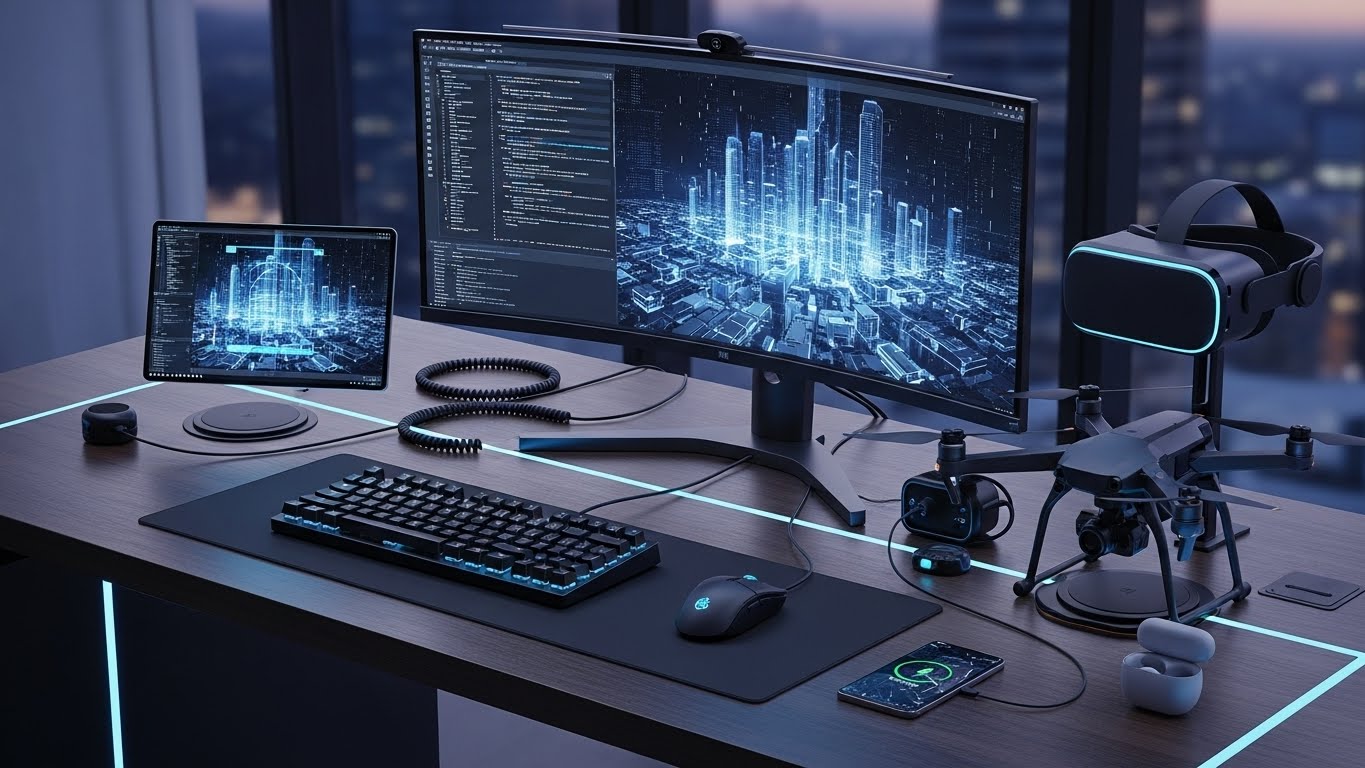
Technology has always been the defining force of human civilization. From the invention of the wheel to the rise of artificial intelligence, our world has continuously evolved under the influence of human innovation. Every era of human history has been marked by breakthroughs that transformed not only how we live but also how we think, work, and communicate. The story of technology is essentially the story of humanity itself — a tale of curiosity, creativity, and the relentless desire to make life better, faster, and smarter.
In the twenty-first century, technology has reached a level of sophistication that would have been unimaginable just a few decades ago. Artificial intelligence, robotics, genetic engineering, quantum computing, and nanotechnology are no longer distant dreams — they are realities shaping our everyday existence. To truly appreciate where we are today, it’s essential to understand how we got here. This journey begins centuries ago, in the heart of the Industrial Revolution, and continues through the digital explosion into the modern age of intelligent machines.
The Birth of Modern Technology: The Industrial Revolution
The Industrial Revolution, which began in the late 18th century, marked the first major turning point in technological history. Before this period, most societies were agrarian, relying on manual labor and simple tools. The invention of machines that could perform work faster and more efficiently changed everything. Steam engines, textile machinery, and ironworks laid the foundation for modern industry.
One of the key innovations of this era was James Watt’s steam engine, which revolutionized transportation and manufacturing. Trains and steamships drastically reduced travel time, connecting cities and countries like never before. The production of goods shifted from small workshops to large factories, creating a new economic model based on mass production and mechanization.
This period also saw the rise of communication technologies. The invention of the telegraph by Samuel Morse allowed messages to travel across continents in seconds. It was the first hint of the global connectivity that would later define the digital age. The Industrial Revolution not only transformed technology but also society, bringing both unprecedented progress and new challenges such as labor exploitation, pollution, and urban overcrowding.
The Age of Electricity and Innovation
As the 19th century gave way to the 20th, a new wave of technological progress emerged. Electricity became the dominant force driving innovation. Thomas Edison’s electric light bulb illuminated homes and streets, changing the rhythms of human life. Nikola Tesla’s alternating current system made it possible to transmit electricity over long distances, powering entire cities and industries.
Communication also advanced rapidly during this period. Alexander Graham Bell’s telephone revolutionized how people interacted, making instant voice communication possible across vast distances. Soon after, the development of radio brought information and entertainment to millions of homes, while the first experiments with television laid the groundwork for a new era of mass media.
Transportation technology evolved as well. The invention of the internal combustion engine led to the rise of automobiles and airplanes, transforming mobility and global commerce. Henry Ford’s assembly line production method made cars affordable for ordinary people, symbolizing the democratization of technology. By the early 20th century, technology had become deeply intertwined with daily life, setting the stage for even greater changes to come.
The Digital Revolution: Birth of the Computer Age
The next great transformation came with the advent of digital technology. The invention of the computer in the mid-20th century fundamentally changed the way humans process and store information. Early computers like ENIAC were massive machines that occupied entire rooms, but they could perform calculations thousands of times faster than humans. These machines were initially used for military and scientific purposes, but their potential was quickly recognized by industry and academia.
The development of the transistor in 1947 by scientists at Bell Labs was a pivotal moment. It replaced bulky vacuum tubes, allowing computers to become smaller, faster, and more reliable. This breakthrough led to the creation of integrated circuits, which paved the way for modern microprocessors. In the 1970s, companies like Intel and IBM began producing personal computers, bringing computing power to homes and offices around the world.
The rise of the internet in the late 20th century transformed the digital revolution into a global phenomenon. Originally developed as a communication network for researchers and the military, the internet quickly expanded into every aspect of modern life. Email, websites, and online communication redefined how people interacted, learned, and conducted business. The launch of the World Wide Web in the 1990s turned the internet into a public space for knowledge and commerce, giving birth to the modern information economy.
The Mobile Era and the Power of Connectivity
The early 2000s introduced another major shift — the mobile revolution. The proliferation of smartphones and wireless technology allowed people to carry the internet in their pockets. Mobile devices became the central hub of modern life, combining communication, entertainment, navigation, and computing into a single portable device.
Apple’s iPhone, launched in 2007, symbolized this transformation. It was more than just a phone — it was a platform for innovation. The app ecosystem it created enabled developers to design tools for virtually every human need, from health tracking to gaming, banking, and education. Android devices followed, expanding mobile technology to a global audience and making digital connectivity universal.
Social media platforms also emerged during this era, changing how people connect, communicate, and share information. Platforms like Facebook, Twitter, and Instagram turned users into content creators and gave rise to the influencer economy. Mobile technology blurred the lines between the digital and physical worlds, making connectivity an essential part of modern identity.
The Age of Artificial Intelligence
Today, we live in what many call the “Age of Artificial Intelligence.” AI has become the latest frontier of technological innovation, reshaping industries, economies, and even human relationships. Unlike previous revolutions driven by machines that replaced physical labor, AI represents a transformation of cognitive labor — machines that can think, learn, and make decisions.
Artificial intelligence is not a single technology but a collection of tools and methods that enable machines to process information intelligently. Machine learning, neural networks, and deep learning allow computers to recognize patterns, understand language, and make predictions. These capabilities power everything from voice assistants like Siri and Alexa to recommendation systems on streaming platforms and online stores.
AI’s impact extends far beyond convenience. In healthcare, AI algorithms assist doctors in diagnosing diseases more accurately and discovering new drugs. In finance, machine learning models analyze market trends and detect fraud. In manufacturing, robotics powered by AI optimize production lines and reduce waste. Even creative fields such as art, music, and writing are being redefined by AI tools capable of generating original content.
However, the rise of artificial intelligence also brings ethical and social challenges. Questions about data privacy, job displacement, algorithmic bias, and the potential misuse of AI technology have sparked intense global debate. As with every technological revolution, society must find ways to balance innovation with responsibility.
The Internet of Things and Smart Living
Parallel to the growth of artificial intelligence, the Internet of Things (IoT) has emerged as a defining feature of modern technology. IoT refers to the network of interconnected devices that communicate and share data with each other. From smart thermostats that adjust the temperature automatically to wearable devices that monitor health, IoT has made everyday life more efficient and personalized.
Smart homes are becoming increasingly common, equipped with voice-controlled assistants, automated lighting, and security systems that can be managed remotely. In cities, IoT plays a vital role in developing smart infrastructure — managing traffic, monitoring air quality, and optimizing energy consumption. This integration of technology into the physical environment represents a new phase of human interaction with machines, where technology operates seamlessly in the background of daily life.
The challenge, however, lies in ensuring security and privacy. As more devices become connected, the risk of cyberattacks and data breaches grows. Balancing convenience with safety will be a critical task in the continued development of IoT technologies.
Cloud Computing and the Digital Ecosystem
Another major advancement that has defined the past decade is cloud computing. In the past, software and data were stored locally on individual computers. Cloud technology changed that model by allowing users to store, process, and access data over the internet. This shift enabled unprecedented scalability, flexibility, and collaboration.
Businesses now rely on cloud platforms to host applications, manage data, and run complex analytics without investing in physical hardware. Individuals use cloud storage to keep photos, videos, and documents accessible across devices. Cloud computing has become the foundation of the digital economy, powering everything from streaming services to AI applications and blockchain systems.
By decentralizing computing power, the cloud has democratized access to advanced technology. Startups and small businesses can now compete on a global scale, leveraging the same computational tools once reserved for large corporations. As 5G networks expand, cloud-based technologies will continue to grow in importance, driving innovation in areas such as virtual reality, augmented reality, and edge computing.
The Role of Data in the Modern World
If the 20th century was defined by the rise of machines, the 21st century is defined by the rise of data. Every click, search, and online interaction generates data, forming the digital fingerprints of human behavior. Data has become the most valuable resource of the modern age, often referred to as the “new oil.” Companies and governments use data analytics to make decisions, predict trends, and personalize experiences.
Big Data technologies have made it possible to process massive amounts of information in real time. Predictive analytics, powered by AI, allows organizations to forecast customer behavior, optimize supply chains, and even prevent crime. However, the power of data also raises concerns about surveillance, consent, and ownership. Who controls the data, and how it is used, are questions that will shape the future of digital ethics and governance.
Robotics and Automation
Automation has always been a driving force of technological advancement, but today’s robotics have reached a new level of sophistication. Robots now perform complex tasks that once required human dexterity and intelligence. From automated assembly lines in factories to delivery drones and robotic surgeons, machines are becoming an integral part of modern life.
In agriculture, robots plant, water, and harvest crops with precision, reducing waste and increasing yields. In logistics, autonomous vehicles transport goods across warehouses and cities. In service industries, robots assist customers, clean spaces, and perform routine maintenance. The integration of robotics and AI is creating a future where machines collaborate with humans rather than simply replacing them.
The growing presence of robots in society also raises philosophical questions. What happens when machines begin to exhibit behaviors that mimic empathy or creativity? As robots become more humanlike, society must redefine the boundaries between man and machine.
The Future: Quantum Computing and Beyond
Looking ahead, the next great leap in technology may come from quantum computing. Unlike traditional computers that use bits to represent data as zeros or ones, quantum computers use quantum bits, or qubits, which can represent multiple states simultaneously. This allows quantum machines to process information exponentially faster than classical computers.
Quantum computing holds immense potential for solving problems that are currently unsolvable, such as complex molecular simulations for drug discovery, optimization of global logistics, and unbreakable encryption methods. Although still in its early stages, this technology promises to redefine the limits of computation and usher in a new era of scientific discovery.
Beyond quantum computing, emerging fields like biotechnology, nanotechnology, and space technology are also poised to transform human life. Advances in genetic engineering may lead to the eradication of diseases, while nanotechnology could enable the creation of materials with extraordinary properties. The exploration of Mars and the moon could mark the beginning of humanity’s expansion beyond Earth.
The Human Side of Technology
Amidst all these innovations, it’s important to remember that technology is not just about machines — it’s about people. Every invention, from the steam engine to artificial intelligence, reflects the hopes, fears, and creativity of humanity. Technology has the power to connect us, empower us, and improve our quality of life. But it also has the potential to divide, manipulate, and isolate if not used responsibly.
As we move deeper into the digital age, the human values that guide technological progress become more crucial than ever. Education, ethics, and empathy must accompany innovation. The goal of technology should not be to replace humanity but to enhance it — to create a world where progress serves people, not the other way around.
Conclusion: The Ever-Accelerating Journey of Innovation
The evolution of technology is a story without an end. Each generation builds upon the discoveries of the last, pushing the boundaries of what’s possible. From steam engines to smartphones, from telegraphs to quantum computers, the trajectory of innovation continues to accelerate. We now live in an age where change happens faster than ever before, and the future arrives in waves of new discovery.
What remains constant, however, is the human spirit that drives it all — the desire to explore, to create, and to understand. Technology, in all its forms, is simply the manifestation of that spirit. As we step into the next frontier of artificial intelligence and beyond, one truth remains clear: the future of technology is, and always will be, the future of humanity.