
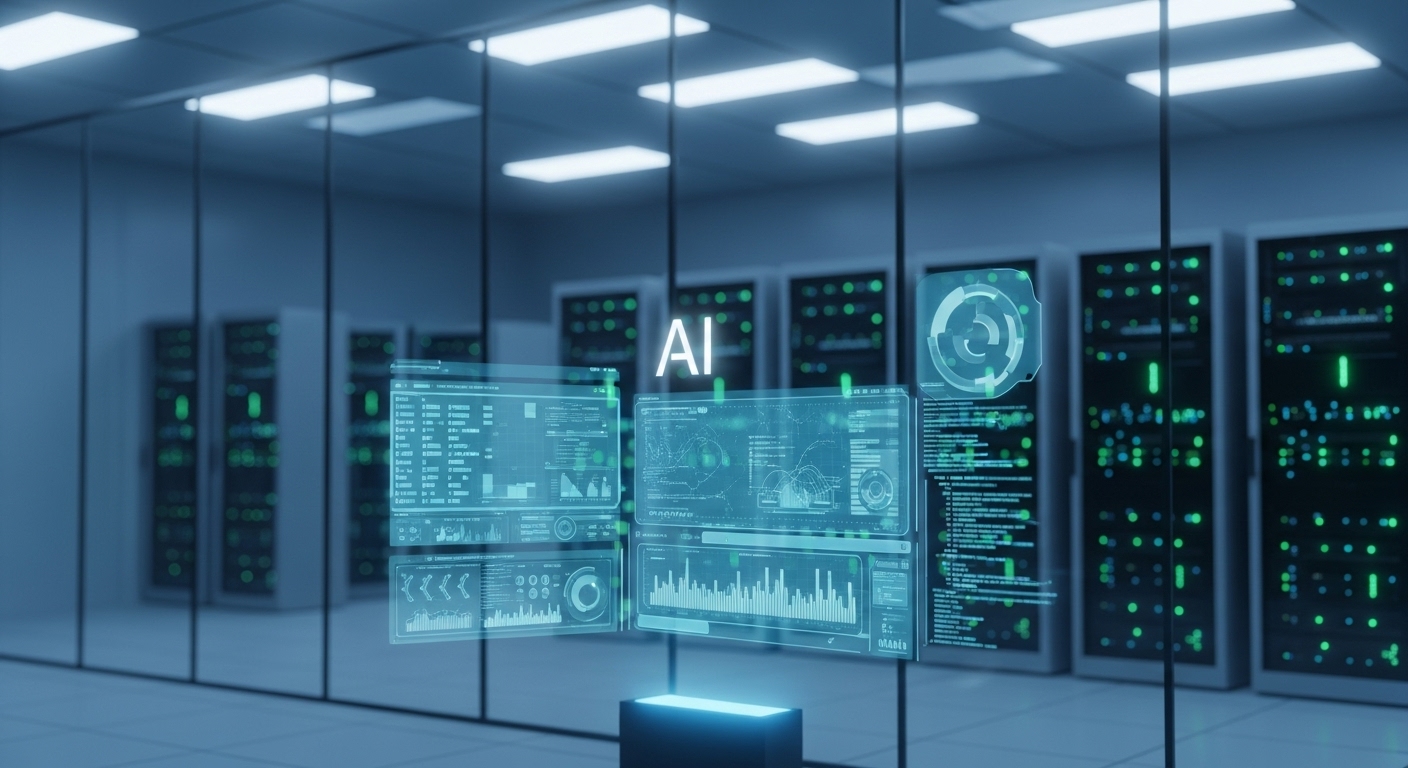
Technology is advancing at an unprecedented rate, transforming every aspect of our lives. From how we work and communicate to how we learn, shop, and even entertain ourselves, technological innovations continue to reshape our world in profound ways. In recent years, we’ve witnessed the rise of artificial intelligence (AI), the expansion of the Internet of Things (IoT), the breakthrough of quantum computing, and the rapid development of autonomous vehicles. These innovations are just the beginning, and the future promises even more game-changing advances.
In this blog post, we’ll explore the major technological trends and innovations that will shape the next decade. From the impact of AI on industries to the rise of augmented and virtual reality, we’ll take a closer look at how technology is not only changing our present but also redefining the future of work, entertainment, healthcare, and beyond.
The Era of Artificial Intelligence: Redefining Human Potential
Artificial intelligence (AI) is one of the most talked-about technologies of our time, and for good reason. From self-driving cars to personal assistants like Siri and Alexa, AI is becoming an integral part of everyday life. But AI is not just about chatbots or recommendation systems—it’s transforming industries and solving complex problems at a scale and speed never seen before.
AI in Healthcare: Revolutionizing Patient Care
In the healthcare industry, AI has the potential to revolutionize the way we diagnose, treat, and manage diseases. Machine learning algorithms can analyze massive amounts of data, identify patterns, and make predictions that help doctors diagnose illnesses earlier and with greater accuracy. AI is already being used to identify signs of diseases like cancer, Alzheimer’s, and heart disease at much earlier stages than traditional methods, increasing the chances of successful treatment.
Moreover, AI-powered robots are beginning to assist in surgeries, providing greater precision and reducing recovery times for patients. Personalized medicine, driven by AI, can also tailor treatments to an individual’s genetic makeup, leading to more effective and less invasive therapies. In the future, AI may play a central role in managing global healthcare systems, streamlining administrative tasks, and even providing virtual healthcare through telemedicine platforms.
AI in Business: Transforming Operations and Customer Experiences
Artificial intelligence is also changing the way businesses operate. AI-driven automation is streamlining everything from manufacturing processes to customer service. Chatbots powered by AI can handle a variety of customer queries, freeing up human workers to focus on more complex issues. In industries like retail, AI can predict consumer behavior, allowing businesses to offer personalized product recommendations and targeted advertising.
AI is also reshaping how companies approach data. With AI-driven analytics, businesses can mine massive datasets for insights that would have been impossible for humans to uncover manually. From predictive maintenance in manufacturing to supply chain optimization, AI is enabling organizations to operate more efficiently and reduce costs.
The Ethics of AI: Navigating the Challenges Ahead
While AI holds immense promise, it also raises important ethical questions. Concerns about job displacement due to automation, privacy risks associated with AI-powered surveillance, and the potential for bias in AI algorithms are just some of the challenges that need to be addressed as we continue to develop and deploy AI systems. Balancing the benefits of AI with these ethical considerations will be crucial in ensuring that this technology benefits society as a whole.
The Rise of Quantum Computing: A New Frontier in Processing Power
Quantum computing is poised to disrupt industries by solving complex problems that are beyond the capabilities of traditional computers. Unlike classical computers, which process information as binary bits (0s and 1s), quantum computers use quantum bits or qubits, which can represent and store information in multiple states simultaneously.
Quantum Computing in Research and Development
The potential applications of quantum computing are vast, particularly in fields like cryptography, drug discovery, and materials science. Quantum computers could revolutionize the pharmaceutical industry by simulating the behavior of molecules at the quantum level, enabling researchers to develop new drugs more quickly and accurately. In materials science, quantum computing could lead to the discovery of new materials with enhanced properties, such as superconductors that operate at room temperature.
Solving Problems That Are Impossible for Classical Computers
One of the most exciting possibilities of quantum computing is its ability to solve problems that would take traditional computers millions of years to crack. For example, quantum algorithms could be used to optimize supply chains, enhance financial modeling, and even improve climate predictions. Quantum computers could also have a profound impact on cybersecurity, both by strengthening encryption methods and, conversely, by potentially breaking existing encryption protocols.
The Road Ahead for Quantum Computing
While quantum computing holds immense potential, it is still in its infancy. Researchers are working to overcome major challenges related to qubit stability, error correction, and scalability. It will likely be several years before quantum computers are able to solve real-world problems at a practical scale. However, the progress being made in this field suggests that the future of computing will be dramatically different from anything we can imagine today.
The Internet of Things: Connecting the World Like Never Before
The Internet of Things (IoT) is one of the most significant technological trends of the 21st century. IoT refers to the network of physical devices, vehicles, appliances, and other objects that are embedded with sensors, software, and connectivity to exchange data with other devices and systems. This interconnectedness is transforming the way we live, work, and interact with the world around us.
Smart Homes: The Future of Living
Smart homes are one of the most visible manifestations of IoT. With IoT-enabled devices like smart thermostats, lights, security systems, and refrigerators, homeowners can now control nearly every aspect of their living environment through their smartphones or voice-activated assistants. These devices can learn from user behavior and optimize energy usage, reduce costs, and improve overall comfort.
The future of smart homes will see even greater integration of IoT devices, where everything from your kitchen appliances to your fitness equipment will be seamlessly connected. Imagine a home that automatically adjusts lighting based on the time of day, orders groceries when you’re running low, and even detects when your car needs maintenance.
IoT in Healthcare: Improving Monitoring and Treatment
In healthcare, IoT devices are helping doctors remotely monitor patients’ vital signs and chronic conditions. Wearables like smartwatches and fitness trackers can collect data on heart rate, sleep patterns, and activity levels, giving doctors real-time information about their patients’ health. This enables early detection of health issues and provides a more personalized approach to healthcare.
Moreover, IoT devices are making their way into hospitals and medical facilities, where they can track the location of medical equipment, monitor patient health metrics, and even assist with surgery. As IoT technology becomes more sophisticated, the potential for improving healthcare outcomes and reducing costs will continue to grow.
The Security Challenges of a Hyper-Connected World
As IoT devices become more widespread, the security challenges associated with them also increase. With so many devices collecting and transmitting personal data, there is a heightened risk of cyberattacks, data breaches, and privacy violations. Ensuring that IoT devices are secure and that the data they collect is protected will be one of the most important challenges for both businesses and consumers moving forward.
The Future of Transportation: Autonomous Vehicles and Beyond
Transportation is another area that is being dramatically reshaped by technology. Autonomous vehicles (AVs), electric vehicles (EVs), and alternative forms of transportation are set to change the way we move from place to place.
Autonomous Vehicles: A Revolution in Mobility
Self-driving cars are no longer the stuff of science fiction—they are quickly becoming a reality. Companies like Tesla, Waymo, and Uber are leading the charge in developing autonomous vehicles that can drive themselves with minimal human intervention. These vehicles use a combination of sensors, cameras, radar, and machine learning algorithms to navigate and make decisions in real time.
The widespread adoption of autonomous vehicles could have a profound impact on road safety, reducing the number of accidents caused by human error. Autonomous vehicles could also help reduce traffic congestion, optimize fuel efficiency, and enable new forms of mobility for people with disabilities or the elderly.
The Rise of Electric Vehicles
Electric vehicles (EVs) are another major development in the transportation sector. With growing concerns about climate change and the environmental impact of fossil fuels, EVs offer a cleaner, more sustainable alternative to traditional gasoline-powered cars. Advances in battery technology are making EVs more affordable and practical, with longer driving ranges and faster charging times.
The future of transportation will likely be a combination of autonomous, electric, and shared vehicles, where people no longer own cars but instead rely on a network of self-driving EVs for their mobility needs. This shift could drastically reduce the number of cars on the road, leading to less pollution, fewer traffic jams, and a more efficient transportation system overall.
The Role of 5G: Accelerating Technological Innovation
5G, the fifth generation of wireless technology, is set to change the way we connect to the internet. With faster speeds, lower latency, and the ability to support millions of devices simultaneously, 5G will enable new applications that were not possible with previous generations of wireless technology.
5G and the Internet of Things
5G will play a crucial role in the growth of the IoT ecosystem. With its high-speed, low-latency capabilities, 5G will allow IoT devices to communicate with each other in real time, enabling everything from smart cities to autonomous vehicles to connected healthcare systems. This ultra-fast connectivity will make it possible to collect, analyze, and respond to data more quickly, driving the next wave of innovation.
5G and Immersive Technologies
5G will also enhance the capabilities of immersive technologies like virtual reality (VR) and augmented reality (AR). With 5G, VR and AR applications will become more seamless and interactive, allowing for real-time, high-quality experiences. Whether it’s for gaming, training simulations, or remote collaboration, 5G will unlock the full potential of immersive technologies.
Conclusion: The Future is Limitless
As we look ahead, the future of technology is filled with exciting possibilities. From AI-driven innovations to the rise of quantum computing, IoT, autonomous vehicles, and 5G, we are standing on the cusp of a new era in technology. These advancements will not only reshape industries but will also redefine how we live, work, and interact with the world.
While challenges remain—especially in terms of ethics, security, and privacy—the potential for technology to improve our lives is undeniable. As long as we continue to innovate responsibly and thoughtfully, the future of technology promises to be as transformative and inspiring as the advances we’ve already seen. The future is, indeed, limitless.